STUDY A
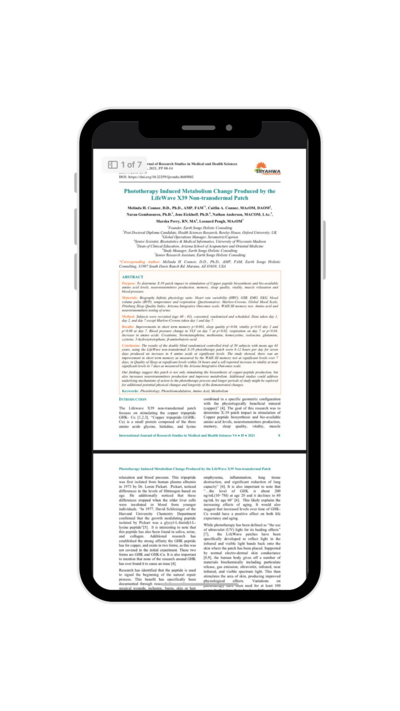
A double-blind randomized study reported an increase in eight amino acids and changes relating to short-term memory, sleep and vitality.
STUDY AEight independent studies examine whether the X39 patch increases copper-peptide levels in blood and their possible role in tissue repair, blood vessel and nerve growth, and skin health.
Phototherapy uses visible and infrared light to stimulate cellular activity. LifeWave patches reflect light back into the body.
This paper examines research into photobiomodulation, also called low-level light therapy.
PHOTOBIOMODULATION AND LIGHT THERAPYLearn more about how the body may benefit from human infrared light.
HUMAN INFRARED RADIATIONAcupressure applies gentle pressure to points associated with meridians. Research has examined its potential applications for pain and chronic fatigue.
This study examined whether acupressure can help responders alleviate pain during transport to a hospital.
ACUPRESSURE FOR INJURY PAINA study examined whether pressing acupoints and massage can improve symptoms of chronic fatigue syndrome.
ACUPRESSURE AND ENERGYOur patented technology is the difference. LifeWave reimagines the possibilities of science and light for general wellness.
10716953B1, 9943672B2, D745504, D746272, D745503, D745502, D745501, 9532942, 9263796, 9258395, 9149451, 8734316, 8602961
A wearable device described in the patent as regulating the flow of thermodynamic energy in the body.
TECHNOLOGYA wearable phototherapy patch described in the patent in relation to strength, stamina, and pain relief.
X39More than 80 independent studies conducted at universities and research institutions explore LifeWave technology. Source documents and further information about X39 are listed below.
A study published in Internal Medicine Research reported a significant rise in blood copper peptide concentrations in participants who wore X39 patches for one week.
LEARN MOREA randomized double-blind study reported changes in eight amino acids and measures relating to short-term memory, sleep, and vitality.
LEARN MOREThis pilot study measured blood GHK and GHK-Cu after one week of X39 use, reporting changes after 24 hours and again after seven days.
LEARN MOREThis pilot study examined changes in participants' biofields compared with a control group.
LEARN MOREThis study explored metabolic and physiological measures while participants wore the non-transdermal X39 phototherapy patch.
LEARN MOREResearchers reported changes in P300 amplitude topographic and coherence maps among study participants.
LEARN MOREResearchers observed metabolic changes over one week and recommended longer studies.
LEARN MOREThe study examined blood pressure, amino acids, sleep, short-term memory, and self-reported vitality.
LEARN MOREA pilot study reported changes in blood GHK at 24 hours and seven days after X39 use.
LEARN MOREA randomized trial studied auricular acupressure and body mass index over eight weeks.
LEARN MOREA review discusses possible mechanisms through the auricular branch of the vagus nerve and appetite regulation.
LEARN MOREA study investigated antioxidant enzymes after auricular acupressure in people at risk of diabetes.
LEARN MOREThis material reviews research concerning acupressure and telomeres.
LEARN MOREA study examined lower-back pain, activity limitations, and functional status after acupressure.
LEARN MOREResearch investigated stimulation of point H7 and its association with sleep and anxiety.
LEARN MOREThis paper considers pressure points on the head in a traditional ritual and possible connections with acupressure.
LEARN MOREA randomized trial studied acupressure bands for nausea in early pregnancy.
LEARN MORE